Water Resilience in India: Practical Solutions Every Building Can Adopt Today
Water Resilience in India: Practical Solutions Every Building Can Adopt Today
India is entering a period of serious water stress. Rapid urbanization, climate change, and population growth are increasing demand while natural water sources are shrinking. According to NITI Aayog, around 600 million Indians face high to extreme water stress, and many major cities are at risk of severe groundwater depletion.
Globally, the situation is equally concerning. The World Health Organization and UNICEF estimate that 1 in 3 people lack access to safe drinking water.
For architects, developers, facility managers, industries, and homeowners, the response must shift from water consumption to water management. The most effective framework is simple:
Reduce → Reuse → Recycle
This approach is already being implemented successfully worldwide and can be adapted easily in India.
The Core Issue: Water Demand Is Growing Faster Than Supply
Several structural problems are driving the crisis:
Excessive groundwater extraction
Rapid urban expansion covering natural lakes and recharge zones
Inefficient plumbing and irrigation systems
Industrial and commercial water wastage
Increasing drought frequency due to climate change
Cities are particularly vulnerable because they rely heavily on external water sources and tanker supply systems.
However, buildings themselves can become mini water-management systems.
Global Examples That Demonstrate the Solution
Singapore = The Global Benchmark
Singapore developed one of the most advanced water recycling programs in the world called NEWater. Wastewater is treated through microfiltration, reverse osmosis, and UV purification, producing ultra-clean water used by industries and commercial buildings.
Today, recycled water meets around 40% of Singapore’s total water demand.
Namibia = Direct Drinking Water Reuse
Windhoek in Namibia operates one of the world’s earliest direct potable water reuse systems, treating wastewater to drinking water standards since 1968.
Israel = Agriculture Water Recycling
Israel recycles more than 80% of its wastewater, primarily for agriculture irrigation, the highest rate globally.
These examples show that water recycling is technically viable, safe, and scalable.
Extremely Practical Water Solutions for India
The following solutions are low-cost, scalable, and immediately implementable in Indian homes, offices, housing societies, and industries.
1. Mandatory Rainwater Harvesting
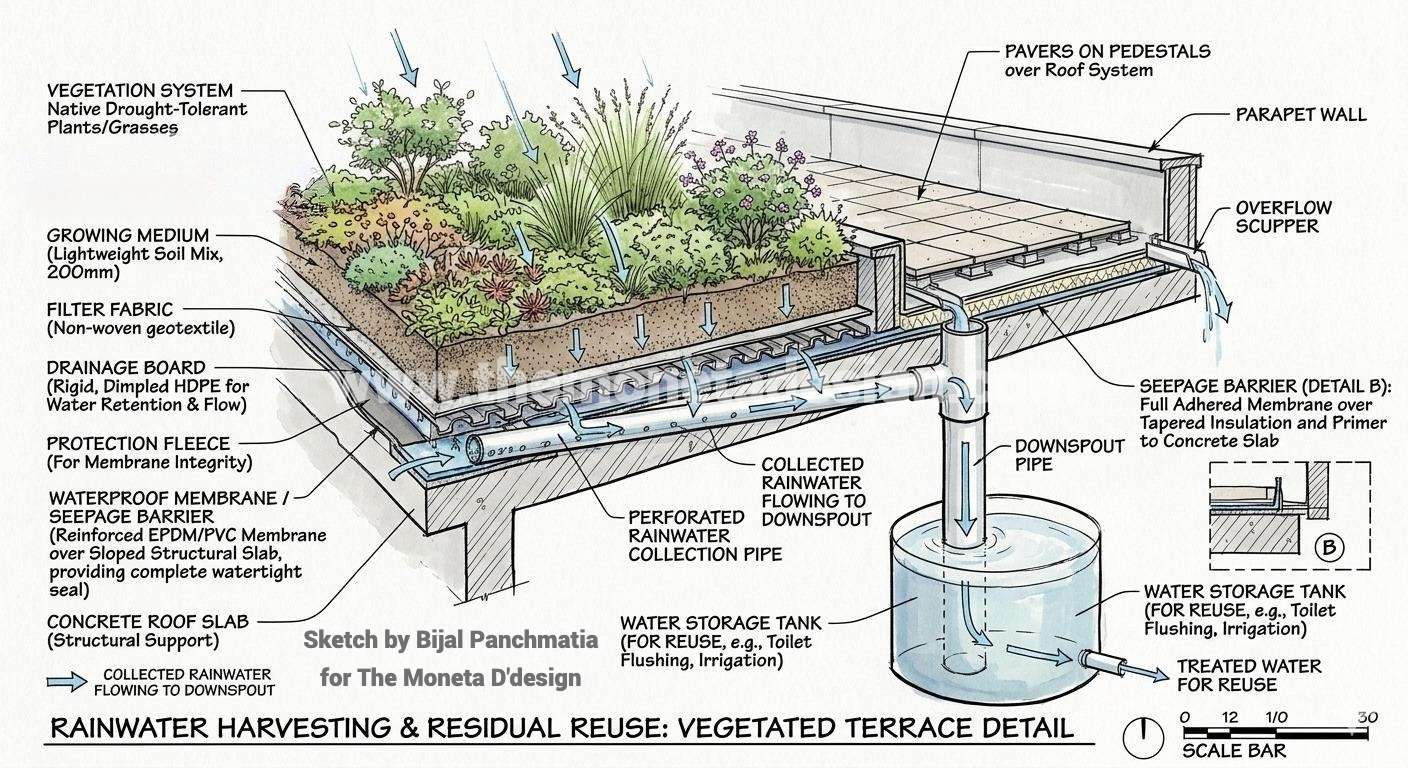
Rainwater harvesting is one of the simplest ways to recharge groundwater.
Implementation methods:
Rooftop rainwater collection
Storage tanks or recharge pits
Percolation wells
Stormwater infiltration trenches
Even a 100 m² roof can collect around 60,000 litres of water annually in many Indian cities.
2. Greywater Recycling in Buildings
Greywater from:
Showers
Wash Basins
Washing Machines
Can be treated and reused for:
Toilet flushing
Gardening
Floor Cleaning
Residential societies implementing greywater reuse can reduce freshwater consumption by 30–40%.
3. Smart Plumbing and Low-Flow Fixtures
Water-efficient plumbing can drastically reduce consumption.
Examples:
Aerated taps
Dual-flush toilets
Sensor-based faucets in commercial buildings
Water-efficient washing machines
These systems can reduce indoor water use by 20–30%.
4. Landscape Design That Uses Less Water
Traditional lawns require enormous water.
Alternative solutions:
Native plants
Drip irrigation
Mulching to retain soil moisture
Treated greywater irrigation
These approaches are widely used in water-stressed countries.
5. On-Site Sewage Treatment Plants (STP)
Housing societies, hotels, hospitals, and industrial complexes can install small STPs to recycle wastewater.
Recycled water can be used for:
Flushing
Landscaping
Cooling towers
Construction activities
Many Indian cities already require STPs for large developments.
6. Industrial Water Circular Systems
Industries can implement:
Cooling water reuse
Membrane filtration
Zero-liquid-discharge systems
These systems allow 80–95% of water to be reused, drastically reducing freshwater demand.
The Role of Architects and Developers
Water resilience must be integrated at the design stage of buildings and urban developments.
Key design strategies include:
Permeable pavements
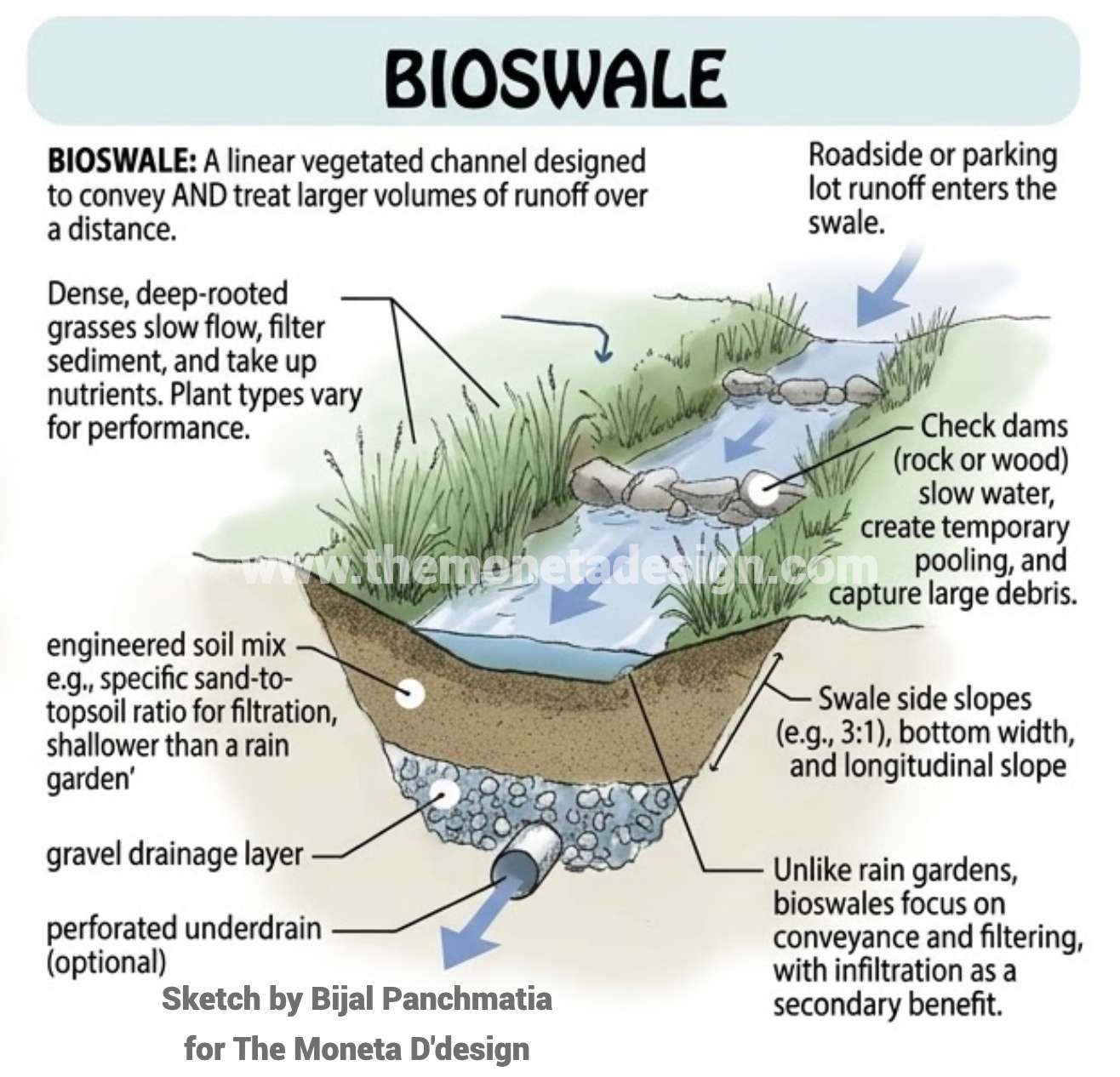
Bioswales and rain gardens
Green roofs
Decentralized water recycling plants
Groundwater recharge systems
When integrated early, these systems cost far less than retrofitting later.
The Way Forward
Water should no longer be treated as a disposable resource. It is:
A public health necessity
An economic resource
A critical environmental asset
India does not need only new dams or pipelines. What it needs is smarter water use at every scale from homes to cities.
If millions of households, buildings, and industries adopt rainwater harvesting, recycling, and water-efficient technologies, India can significantly reduce water stress in the coming decades.
The principle is simple:
Every drop saved is a new source of water.
At Moneta D’Design, we are deeply committed to water sustainability. We integrate efficient water management strategies from the construction phase through the entire operational lifecycle of every project. Consult us to create truly water resilient and future-ready spaces.